The show
Khon on the river
What khon is, why the masks matter, how Thai classical and folk dance differ, and how to watch a short excerpt on a dinner cruise without missing the point.
Book a seat on the river ↗Quick answer
Khon is Thailand's masked dance drama, performed since the Ayutthaya Kingdom and inscribed by UNESCO as intangible heritage in 2018. Dancers act out episodes of the Ramakien, the Thai version of the Ramayana, without speaking: a narrator or chorus carries the words, and the dancers carry the story in gesture. On a dinner cruise you see a short excerpt next to Thai dance, which is enough to recognise the masks and the movement, and to know whether you want to see a full performance later.
A dance drama without spoken lines
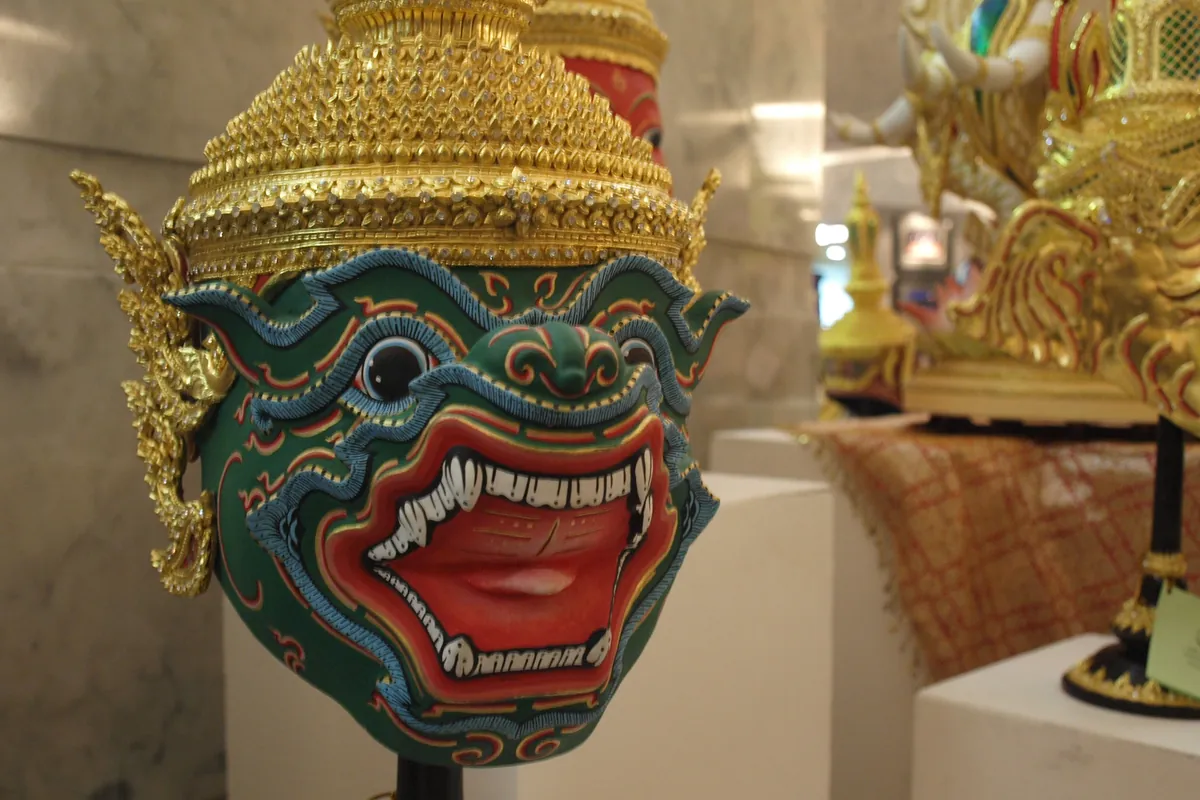
Khon grew up as a court art. It was traditionally performed in the royal court by men in masks, accompanied by narrators and a piphat, the Thai ensemble of wind and percussion. Its performers do not speak. Instead, khon has its own language of movement, using the torso, hands, arms, legs, feet, neck and head to carry meaning, so that a shake of the head means refusal more clearly than a word could. On deck, watch the hands and the feet: that is where the acting happens.
The story behind every scene
Almost every khon performance takes an episode from the Ramakien, one of Thailand's national epics and the Thai telling of the Indian Ramayana. Rama I supervised a version of it in 1797, and his son, Rama II, reworked parts of it for khon. The story pits Phra Ram, the Thai Rama, against Thotsakan, the ten-faced demon king of Lanka, and Rama II's khon version gives an expanded role to Hanuman, the monkey hero. The plot is not needed to enjoy an excerpt, but knowing who wears which mask helps.
Reading the masks
Khon roles follow long tradition: heroes, heroines, ogres and monkeys. The ogres and the monkeys wear masks, while most of the human characters do not, so a masked dancer on deck is usually one of the demons or one of Hanuman's monkeys. Monkey roles are among the most important, and they demand agility; khon training starts young so that the monkey dancers can manage the back flips the part can call for. The demons at the gate of Wat Arun's ordination hall come from the same story, so you may pass one of the characters on the bank.
Classical and folk dance
Thai dance falls into two families: classical dance, the court tradition, and folk dance from the regions. Khon is the most stylised classical form. Lakhon, its classical cousin, draws on a wider range of stories, and its dancers, usually women, dance as a group rather than as individual characters. Folk dance covers the regional dances, the circle dance called ram wong and the ram muay that comes before a Muay Thai match. On a cruise, the dance pieces are usually chosen to be easy to enjoy without any background at all.
An old art, a long record
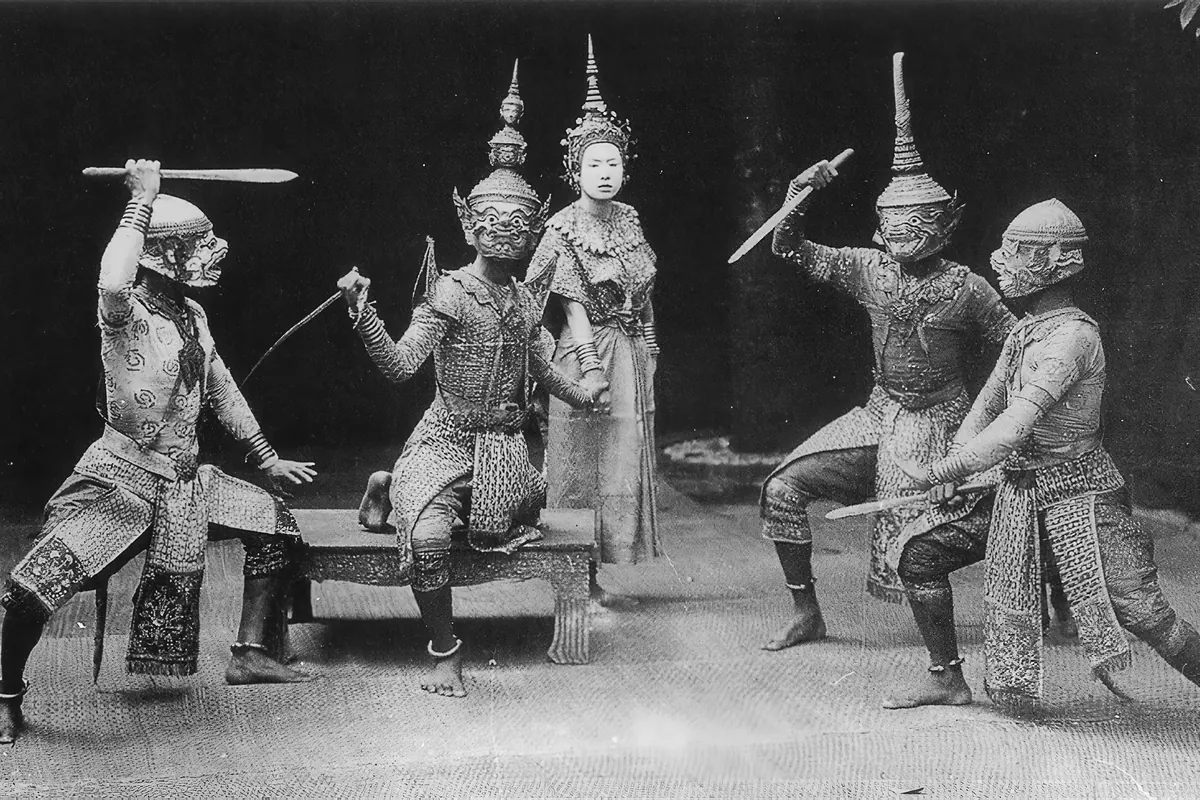
Visitors have been writing about khon for centuries. In 1687, the French diplomat Simon de la Loubère described a masked, armed dance in Ayutthaya that looked to him more like a combat than a dance, and recorded the dancers' high, pointed gilded headdresses. Khon was once performed only by men; today women also dance it, including in the monkey and demon roles. In 2018, UNESCO inscribed khon on the Representative List it keeps for living traditions.
Getting the most from a short excerpt
Put down the fork when the masks appear, because the excerpt will be over quickly. Look for the contrast between the stately human roles and the springy, crouched movement of the monkeys. Notice that nobody on stage speaks; any words come from the music or a narrator. If the few minutes leave you wanting more, look for a full khon production on another night; a theatre stage shows the scale that a deck cannot.
Sources